Saturday, February 18, 2023


তিনি তাঁর মতো করে বিরোধিতা করেছেন


বিদায় বলতে কেমন শ্বাসকষ্ট হয়। তবু বিদায় বলতেই হয়, কখনো কখনো। সুবিমল মিশ্র চলে গেলেন, একটা যুগ চলে গেল। আমাদের যৌবনের এক বিরোধী চরিত্র চলে গেলেন।

সুবিমল মিশ্রের লেখার সাথে প্রথম পরিচয় ‘বিজ্ঞাপন’ পত্রিকার মাধ্যমে। যে পত্রিকার পরে নাম হবে ‘বিজ্ঞাপন পর্ব’। ‘হারান মাঝির বিধবা বৌয়ের মড়া’ সেই পত্রিকার মাধ্যমেই পড়া এবং প্রেমে পড়ে যাওয়া। আমি যদিও কখনোই সুবিমল মিশ্রের অন্ধ ভক্ত ছিলাম না। তবু সুবিমল আমার প্রিয় লেখকদের ভেতর একজন।

কথা এরকম হতে পারে তবে কেমন ছিল আমাদের মেলামেশার ধরন?

আড্ডার সাথে সাথে তর্কাতর্কি, মন কষাকষি, ভাবভালবাসার কোনো অভাব ছিল না। তখন আমরা ‘সমবেত আর্তনাদ’ নামে একটা কাগজ করছি। বইমেলার সেই টেবিলে তখন সুবিমল মিশ্র, হাংরি সুভাষ ঘোষ এবং আমরা। একবার মনে আছে টেবিলে একজন সুন্দরী এসে জিজ্ঞাসা করলেন – আচ্ছা লিটল ম্যাগাজিন ব্যাপারটা কী?

সুবিমলদার স্টান উত্তর ছিল – এত সেজে থাকলে লিটল ম্যাগাজিন কী বোঝা যাবে না।

সুবিমলদাকে ওই মেলাতেই পাঠককে বলতে শুনেছি – আগে বই ধরতে শিখুন তারপর তো বুঝবেন বইটা কী নিয়ে।

খুব কাছ থেকে দেখেছি তাঁর রাগ, অসহায়তা। বইকে কতটা ভালবাসলে এই উচ্চারণ করা যায়। পাঠক এটা কোনো গিমিক নয়। এক ধরনের স্টান্ট ভাবলে ভুল হবে আপনার। নিজের বই বাঁধাই ঘর থেকে আসার পর সেটা অন্তত আধ ঘন্টা ধরে দেখা। এই খুঁতখুঁতে স্বভাব ছিল তাঁর।

আমি এমন কোনো লেখক আর দেখিনি যিনি প্রতিটা বইয়ে একটা পার্সোনাল টাচ দিতে চান। ইচ্ছে করেই প্রচ্ছদে একটা ভুল রেখে তারপর একটা লাল ফেল্ট পেন দিয়ে কারেক্ট করতে দেখেছি আমি।

তবু তাঁর বিরোধিতা করতে আমার বাঁধেনি। কারণ সুবিমলদাকে আমি কখনো গুরু মনে করিনি। তাঁর প্রতিষ্ঠান বিরোধিতার পদ্ধতির সাথে আমি এক মত হতে পারিনি। তিনি তাঁর মতো করে বিরোধিতা করেছেন এবং বাংলা বাজারে সেটাও কোনো অংশে কম নয়। এবং অনেক ক্ষেত্রেই যা অনেকের অস্বস্তির কারণ হয়েছে। হয়েও চলবে হয়ত আরো বহুদিন।


বইয়ের দুনিয়া, বইমেলা বুলেটিনে প্রকাশিত  

Monday, May 23, 2022


Little magazines in Instagram era, a tete-a-tete with independent writer Subhankar Das


Little magazines in Instagram era, a tete-a-tete with independent writer Subhankar Das

India Blooms News Service | @indiablooms 23 May 2022, 12:15 pm

Welcome to the world of little magazines, mimeo editors, outlaw poets, chapbooks and experimental writing. IBNS caught up with Subhankar Das, an independent writer, literary activist, poet, blogger, publisher and film producer, to answer some of the questions pertaining to the future of little magazines and small publications in the era of Instagram.


The Little Magazines movement is a world of its own where unknown writers, unpublished poets and unsung litterateurs and activists share their literary exertions and thoughts with well-knit think alike groups spread across the globe.

But how is this child of the mimeograph revolution of the 60s and 70s coping up with the ever-evolving digital universe where the rules of publication and the way we share information have vastly changed. Is digital revolution an existential threat to Little Magazines or will it bring boundless opportunities and unlock limitless creativity?

The Hungry literary movement in the early 60s was a turning point in Bengal’s literary scene. It inspired thousands of writers, poets and literary enthusiasts and still continues to influence the likes of Subhankar Das who was born in 1963 when the movement was at its prime.

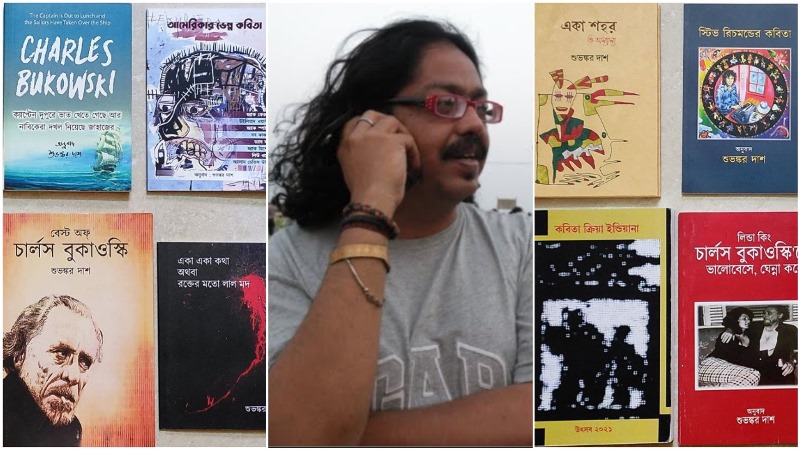
Over the past three decades Subhankar Das has evolved as a poet, writer, publisher, film producer and literary activist. While Jibananda Das and Allen Ginsberg of the Beat generation are his favourite poets, Subhankar is an ardent admirer of German-American author Henry Charles Bukowski Jr aka Charles Bukowski – a big name in the world of `little magazines’.
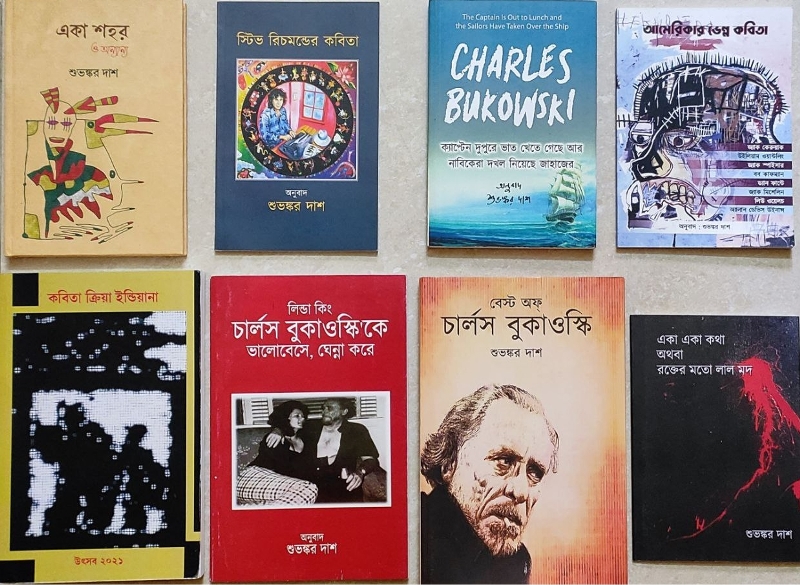
Bukowski, whose writing career spanned five decades from 40s to 90s, is known for his use of violent images and graphic language in poetry and fiction that depict survival in a corrupt, blighted society and his noir existence.

Bukowski wrote thousands of poems, hundreds of short stories and six novels and published over sixty works, mostly in small literary magazines. Scorned, sneered at and mocked by countless authors and critics, Bukowski ascended the literary ladder from the back alleys of the American literary scene to earn enduring popularity and become a mainstream icon. In 1986 Time magazine called him a “laureate of lowlife”.

Das’ job as an engineer in a multinational firm was “nauseating” and he quit his job to write poetry which proved to be therapeutic.

Subhankar has published 24 collections of poetry in Bangla and his chap book of poetry The Streets, The Bubbles of Grass is published in English through his art collective The Graffiti. He has translated Alan Ginsberg’s Kaddish into Bangla along with works of Mallarme and other poets. He founded Graffiti Publications which highlights the works of underground writers and artists.

Excerpts of the Q/A:

Q: What sparked off your tryst with Little Magazines? How did Ginsberg and Bukowski come into your life?

I do not know, maybe the rebel was deep inside me which could not cope with the so-called norms of the society and it always wanted to break free. It started with my first job in Mumbai and ended up naturally with my tryst with Little Magazines in Kolkata. I started searching for authors who are similar minded and I discovered that I am not the only one in this world who is searching for that “other” and the beat poets Ginsberg, Corso, Kerouac and much later Bukowski came to my rescue.

Q: You participated in the recent International Kolkata Book Fair in February 2022 in the Little Magazine section. Any changes or trends you noticed?

I have been participating in the Kolkata Book Fair for the last 30 years or maybe more. I have seen a lot of ups and downs but I am happy with the present situation of Little Magazines and Independent Publications. Readers are buying our books which do not follow the so-called norms of the literary world and I believe it does not happen that easily.

Q: What is the current status of small publications in Bengal? Give us an overview?

Many things are happening in the Bengali Independent Publication field. Some are just publishers publishing left right centre any book they can get hold of. But I like to mention those independent presses who have a focus and know what independent press really means. Parchment, Hoptak Kachra, Atmaja, Eksho Ashi Degree, Tobuo Prayash, to name a few of the publishers are working at present. Apart from that there are many more.  I am not aware of Inde Presses working with English titles except the brand new publisher, Hornbill.

Q: How big is the world of Little Magazines at present? Has it grown in size and enrichment?

Yes, it is not a small world. At least 2000 Little Magazines are published in West Bengal. Enrichment is a difficult word, not many magazines fall in that category but who am I to decide that? I write in those magazines which I like and there are not many in number.

Q: How do you see the impact of the digital revolution on the future of Little Magazines - positive or negative? Are chapbooks going to become a relic of the past?

Little Magazine is a concept of rebellion and it always accepts new technologies. There are a lot of E-Magazines on the web.

But my personal choice if you ask me is the print version, the physical presence of a book or a magazine and I believe printed chap books will stay on. They cannot be replaced by Kindle or some pdf running wild. To add further let me tell you this, that most of the independent publishers have adopted the new technology of ‘print on demand’. Whereby you can publish just 50 copies and when that gets sold off you can print more.

Q: Do you think Little Magazines need to re-invent itself in the context of rapid onslaught of digital publication?

I have already answered that in your last question. Stop thinking in the way the society wants you to think. Little Magazine editors and writers are not jokers and some of them are very well read and techno junkies.

Q: Your views on new age digital versions of Little Magazines and online audience?

I am not sure about this online one-page audience with a very small amount of patience.

Q: Do you think strict digital regulatory laws stifle the free-flowing spirit of Little Magazines?

Yes! That’s a problem of course which we faced while uploading ‘Ebang Falguni’ on YouTube. A short film we produced in 2004, which has one sexually explicit scene, not censored and did rounds in 7 international film festival.

Q: Are there any new Bukowski’s in the world of Little Magazines and small publications?

Allan Davis Winans of the USA whose poems I have translated in Bengali with his kind permission.


Saturday, February 11, 2012

Friday, January 6, 2012

22 POEMS OF CHARLES BUKOWSKI IN BANGLA TRANSLATION

Just out a mini chap book of 22 poems by Charles Bukowski translated into Bangla by me….. this is the cover…… This first edition is limited to 200 copies. Just learned from my poet friend Jay Passer that Buke smoked bidis the last dozen years of his life… Ok then cool Indian bidis and poems by Buke for you ...
..

Tuesday, December 6, 2011

Sunday, December 4, 2011

Sunday, October 30, 2011

Twelfth Man

I do not remember it anymore
I do not remember the date anymore
but still April is the cruelest month
and on someday in April
my friend Subhash died of a heart attack
without treatment suffering at a free hospital
for eight long hours
the twelfth man who has no rights or claims
who comes and vanishes
falls on the way to be replaced immediately
by another.

Some-fucking-day I will drop dead here and nobody
will know, Subhash paused, his right hand up in mid air
and his fingers playing on an invisible piano.

Subhash was a writer who danced with
other little men in this
stark naked local hooch shop and melted
in thin air asking for a glass of drink
for he was all dry.

I do not remember the date
but still April is the cruelest month.

Wednesday, August 17, 2011

Another Ordinary Day


My new E-chap book of poetry Another Ordinary Day is now available from Ten Pages Press as their 31th offering.

Here is the link.

Pic taken in a cafe in Plaka, an old poetical neighborhood under the holy rock of Akropolis, in Athens.

Tuesday, July 19, 2011

Once More In Favor Of Lucy And All Radio Stations

[ I just found this long lost translation of my poem done by Basant Rungta during a rooftop poetry reading I did for his organization Srijan on May 29, 2003.]


At least you know Lucy,
How dangerous was our morning
When our veins were bursting, as if yanked out
Lips were not just grazing but delving,
discovering mysteries of each other
Like water discovering water
You were a face, Lucy
and a lot of clouds
And it would be unfair to call them all just water
They were smoke which had frozen
And houses upon houses
How shadows – walked up to you, readying themselves
All that searching all the waters of the morning
On our florid and blushing skins
Which, if burnt by rain,
colors will cover again
But even then, all those life-long angers
might talk of that burning, that arson
and to master that burning, harness its powers
The blood flowing in streams
on guitar-strings
would have to be licked clean
All those clouds, their lumps
have now lifted their veils and fled
Such is the fun of staying alive
Which means
that the mile-long nets woven by the veins,
have not learnt to fly
Are tied to keys of the guitar
And from out of the stomach emerges that very tree
Its roots and shoots
From the mouth grow branches
which peep out and look
From the eyes, pour leaves – exalted in glory
It would be unfair if they are called just water
Maybe all these are words – not flesh and bones
Maybe these are births, being born
Which cannot be sent to you
through broadcasts from a radio station

Wednesday, July 6, 2011

getting late


I hate this telephone ringing
in the morning,
either it is some agents calling for
repayments of unpaid bills
or news of some little man
jumping out of the window.

I was waiting for the tube
when this girl comes up
and asks me what time it was.
The train was running late by 5 minutes.
I am getting so late she said
and walked away towards a
huge standing fan.

Her hair flying dancing
and I could hear the rumbling
of the train approaching.
When it was a few yards away from us
she jumped
trying to reach for the third rail.
The train screeched to a halt
but by then it was too late.

I came out of the station slowly.
It will take at least an hour
before everything becomes normal again.

Tuesday, July 5, 2011

Canton Chalk Walk and Street Poetry Readings, July 1st, 2011 and more...


It all started last year when poet Christina Brooks started chalking some poetry outside her house in Detroit and this idea caught on and finally became Canton First Friday's CHALK THE WALK event. A group of poets assembled as a street team gathering at the offices of Citizen X (publisher of BRsq.org) at 2:00 on July 1st, 2011 to collect chalk and poems and then heading out to cover the art district sidewalks with lines of verse!

It is a great honor for me to be able to join this group for this event, though physically I was on the other side of the world but I could still share my poems with them and support this venture. Cheers !!!!


let the phone ring
i am not getting up
let the sun burn my legs
i am not pulling the shades down
trying hard to finish this dream


For more photos of the event click here.

Thursday, May 19, 2011

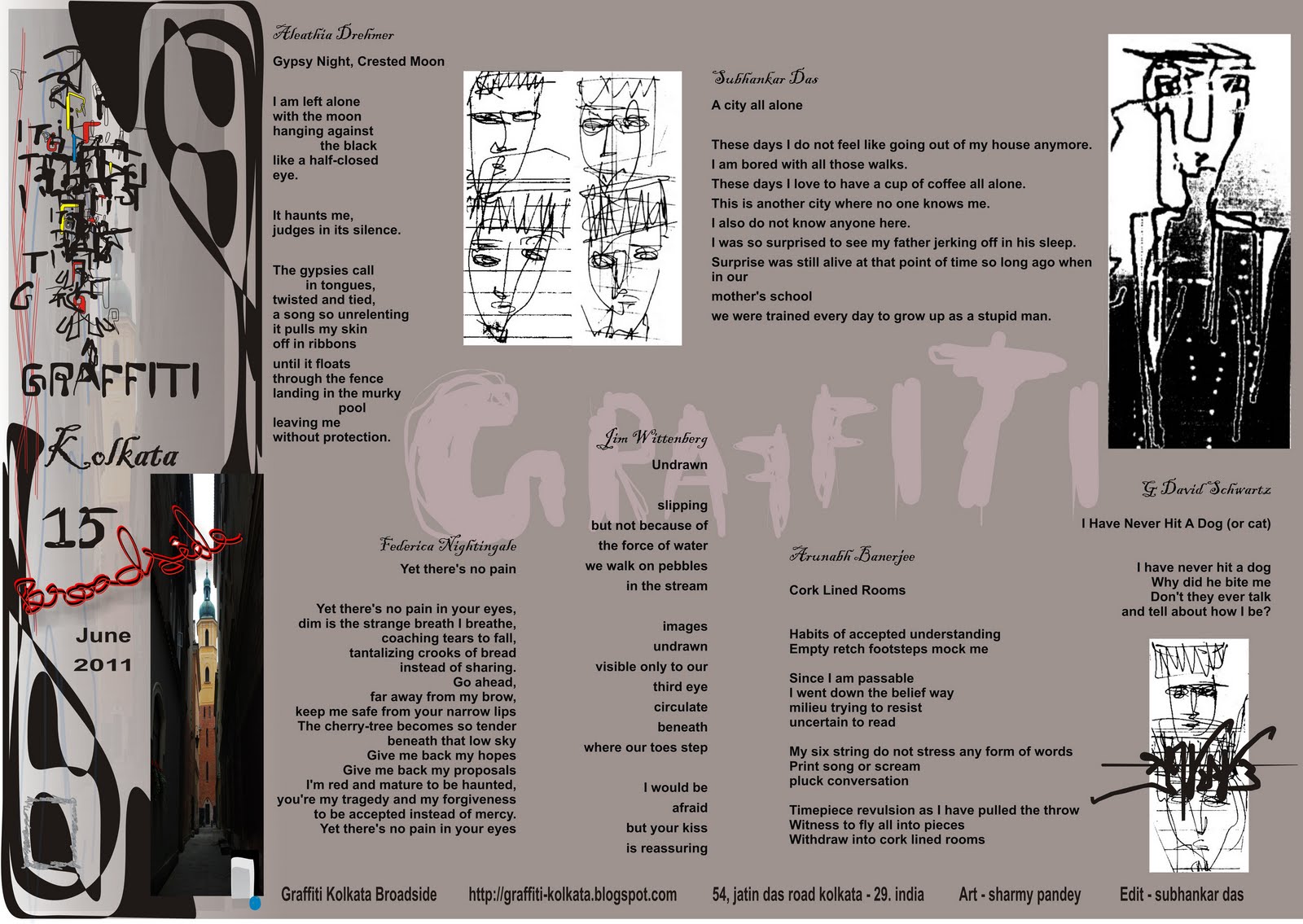
A city all alone

My new poem up at The Camel Saloon
The Bangla version of the poem will be in the new issue of Prathamata, a Bangla Little Magazine from kolkata.

Saturday, April 30, 2011

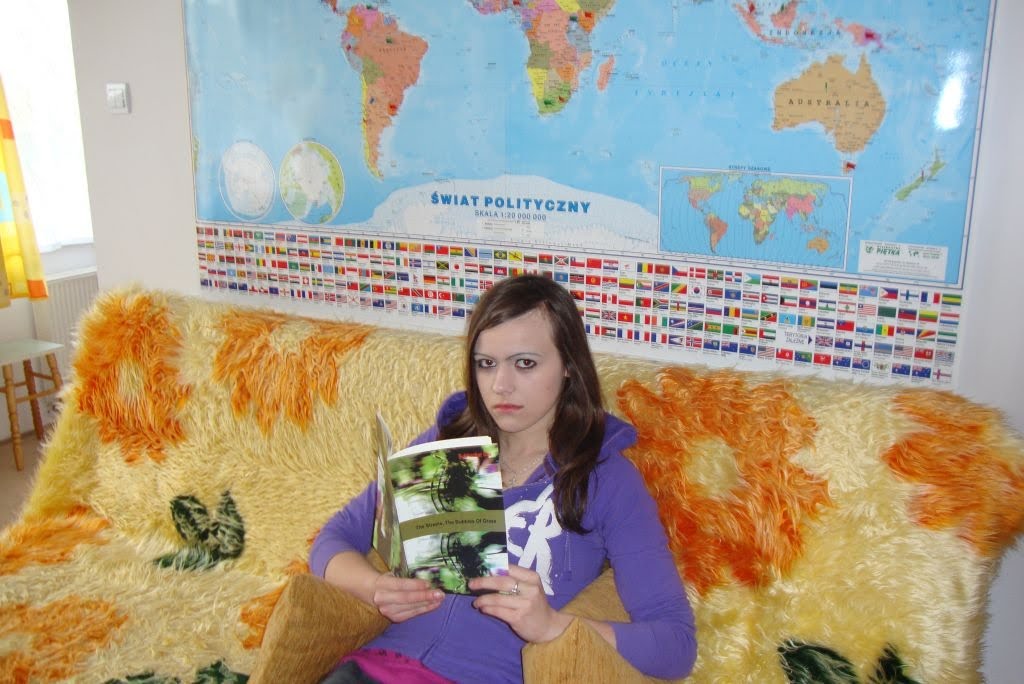
From Poland With Love


Life is not full of rejections only, a few acceptance also helps. Like this photograph from Poland with love made my day.
I have a few poems up in Mad Swirl's Poetry Forum
Nothing. No One. Nowhere.
Guerilla Pamphlets

Friday, April 8, 2011

Foucault’s Pendulum


How are you
Are you still a bird
Or a deer of the dawn
Jumping the red blue signals
I search for my forest
Thickets, under woods, nook and corners
Are flushed with the sun
The forlorn noonday of the city
Are so far away from me
As if they are crossing the border everyday
I put the shadows and a tiny piece of memory
Of this sea afloat


A sms like this an emptiness in this stark sunshine
Just cannot take it anymore
Just think a whole sea or a bunch of dry bindweed
Drying up on the table
Which the deer’s might come some day to eat
Flaring up and down red blue of the city
Maybe are casting their shadows
Images of dry sweat and the salt of the water
Of naked chaotic lane by lanes getting stuck
While trying to make way brushing past
 The continuous prattle of other memories
And a safety pin of a time of split-colours
Dangles like a pendant


......................................

Now in Italian translation

Thursday, March 24, 2011

Grassy Days and Nights


This city will never see the birth of a forest.
I am sitting baffled keeping the picture in front
that you painted on a ruled sheet of paper
with your first blood chants.


How should I stay like grass without being a lover?
How would I press a soft pillow? How would I
drill in wild rock notes into my brain and ears?
Cigarettes would burn out with dreams, existence and solitude,
At one go all will die and sleep down in my guts
without protest.


This is the only bit of memory and rest of the fragments
the loves between the arteries and veins
the glory of the foliage have disappeared,
or everything fell off, rotten and putrid
those sunny days those softness of the little warmth.
I hid the water and those few days which I found by chance.
I have nailed those on my breast in fear of losing them,
And this city, the city’s wrong doing and
rehearsals of life and all those shades and shadows,
our pretension to live.


This city will never see the birth of a forest.
Probably it was born like a day stuck
to a finger like the fragments of a dream
the inevitability of a long sleep
which had no beginning and end.
Life surely will hunt you down one day.


Subhankar Das

The Streets, The Bubbles Of Grass # Reviews


The Streets, The Bubbles Of Grass by Subhankar Das

The Orange Spotlight: Subhankar Das
jason - Posted on 15 December 2010
WHAT TO WEAR DURING AN ORANGE ALERT?


“No routes are left open except to swell the ranks”

Receiving and reading through this collection has been an advanced exercise in the importance of experiencing and understanding other cultures. It is vital to reach out beyond your basic circle, beyond your state, beyond your situation, and beyond your country to discover what you are missing. It may be a buzz phrase, but it is important to be culturally aware. Subhankar Das has been an advocate for and thriving member of the Bangla poetry scene in India since the late eighties. To my eyes, his words are fresh and urgent, foreign but familiar, and an education in culture with every line.

In his latest collection, The Streets, The Bubbles Of Grass, Subhankar uses his craft to all at once subdue and insight. He conjures up images of street life, of nature, of a life filled with living and dying for the word and what it represents. The collection is both personal and universal. I feel this is most clear in the poem “Distance”.

“My wings. Wings. My wings. Because there is fire in the wings- the bones of the featherless wings are flying in the wind. Just now, they would lie on this paper. Side by side. My wings, my bones, my hair.”

The piece begins with this line “Does not matter whether it Subhankar or no Subhankar. Carrying my own corpse like this.” For me it does matter, and I am thankful that Subhankar has traveled this distance and his papers and thoughts and troubles and dreams have landed on my desk.


Dye Hard Press Review
POSTED BY GARY CUMMISKEY


The Streets, The Bubbles of Grass is the latest collection of poems by Subhankar Das and is published by Graffiti Kolkata.
While Das may have abandoned the Burroughsian cut-up techniques of his earlier work and embraced an indigenous approach to language - turning more to the influence of Jibanananda Das - there is still an unmistakable post-modernist approach at play, whether in prose poems such as That Boy, Old Rust and Sailor's Song, the mixed forms of City Blues, or the longer verse works such as A Little More Than The River Khorkai.

As Santanu Roy writes: 'Subhankar's style departs from the conventional wisdom of poetry and anti-poetry. All such margins are being challenged and the reader is finally led to the magic stairs of open text.'